
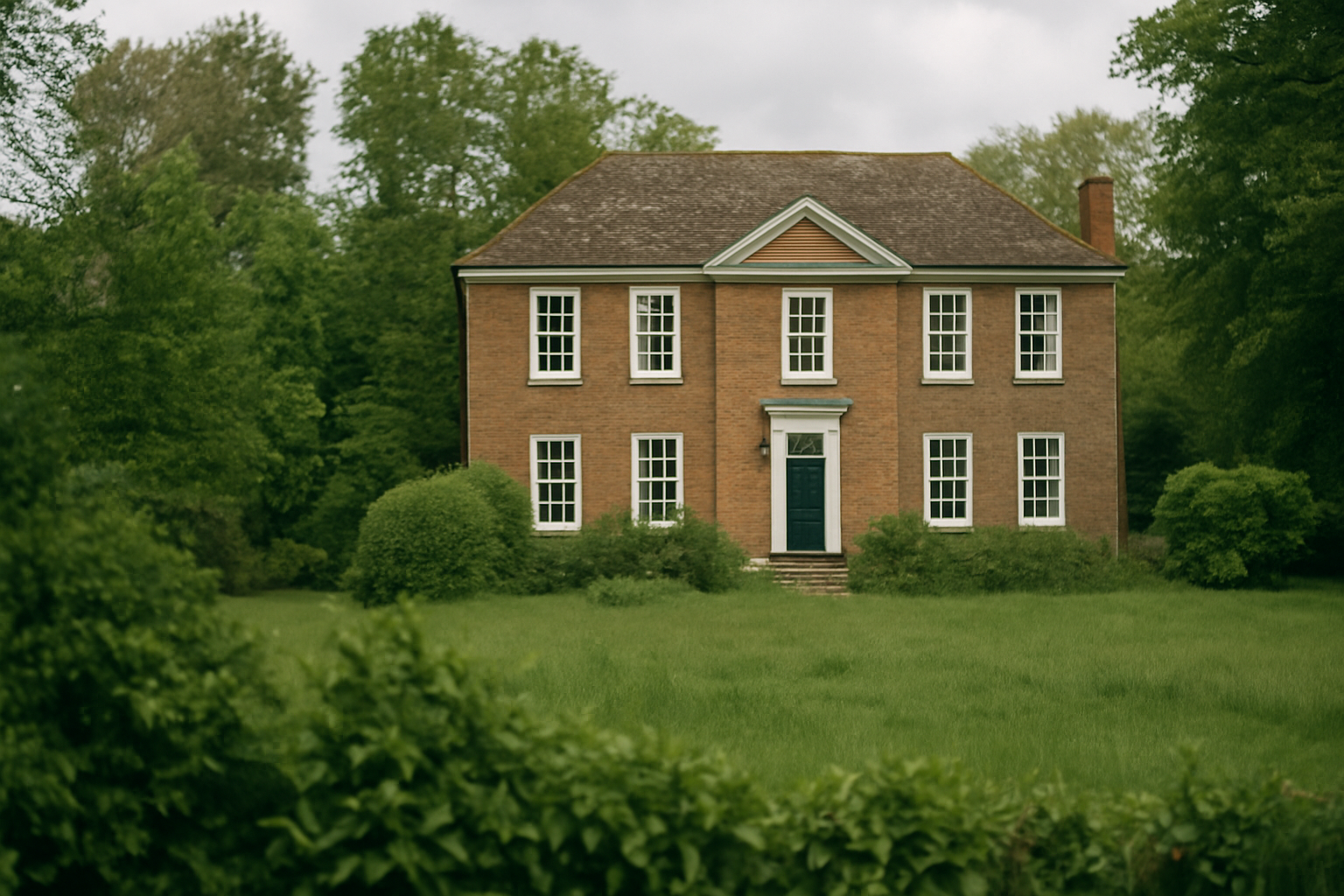
In the 2025 Autumn Budget, Chancellor Rachel Reeves announced the introduction of a new national property tax—informally labelled by the government as a “Mansion Tax”—aimed initially at homes valued above £2 million. Presented as a fairness measure to ensure that owners of the most valuable properties contribute more to public finances, the policy sets out a series of value-based bands with rising annual charges. While framed as a targeted levy on high-end homes, its structure and enabling legislation allow future adjustments to thresholds and rates without requiring further parliamentary approval, making its long-term reach potentially far broader than implied at launch.
The term “Mansion Tax” is deliberately reassuring. It suggests a targeted levy on owners of grand, multi-million-pound properties—a wealth-redistribution measure aimed squarely at the rich. But as with many UK taxes, the label can be misleading. Once legislation is in place, thresholds and rates can often be amended without further parliamentary approval, making it far easier for future governments to widen the scope of the tax.
Recent proposals have typically started with a threshold of around £2 million and suggested additional bands or surcharges for higher-value properties, with annual charges that escalate according to each valuation band. Although presented as a narrow measure affecting a small percentage of households, the UK’s experience with major taxes suggests that such measures rarely remain confined to a small group for long.
This context matters. Homeowners across the country—many of whom do not consider themselves wealthy—could ultimately find themselves captured by a tax originally advertised as targeting “mansions”.
A Pattern Seen Many Times Before
UK tax history is filled with examples of measures introduced for a narrow segment of society that gradually expanded until they affected most taxpayers.
Income Tax
First levied in 1799 as a temporary wartime tax on wealthier individuals. Over time, rates rose, thresholds fell, and PAYE was introduced. Today, it is a universal tax paid by most workers.
National Insurance
Introduced in 1911 for certain manual workers. Subsequent reforms expanded it into a core payroll tax for most employees and the self-employed.
Stamp Duty / SDLT
Originally impacting only a small number of property transactions. As homeownership grew and SDLT replaced the old system in 2003, it became a widely felt cost for mainstream buyers.
VAT
Started in 1973 with a narrower base. Over time, more goods and services have become standard-rated, making VAT an everyday burden on almost all households.
Fuel Duty
When introduced in 1909 very few people drove. As driving became universal, fuel duty became a tax paid—directly or indirectly—by nearly every household.
Council Tax
Introduced in 1993 to replace the Poll Tax. As renting and ownership became near universal, Council Tax evolved into a standard cost for almost all homes.
These examples highlight a simple truth: once a tax exists, expanding it becomes significantly easier than introducing a new one.
Why a Mansion Tax Could Easily Broaden Over Time
1. The Name Creates Political Cover
Referring to the measure as a “Mansion Tax” reassures the public that it targets only the ultra-wealthy. This framing helps legislation pass—but once passed, the name no longer matters. Thresholds can shift quietly over time.
2. Future Threshold and Rate Changes May Not Need Parliamentary Approval
Once the enabling legislation is passed by both Houses, subsequent changes to the thresholds, bands, or rates can often be made through secondary legislation or statutory instruments. These usually receive far less scrutiny and can be amended by governments without further votes in Parliament.
3. Rising Property Values Naturally Expand the Tax Base
A £2 million home today is not a static category. If property prices continue to grow—as they have over several decades—far more households will reach any fixed threshold, even without policy changes.
4. Fiscal Pressure Encourages Expansion
Governments facing budget constraints often turn to already-established tax structures. Once the system is running, lowering thresholds becomes a simple way of raising revenue.
How Many Could Be Affected if Thresholds Fell?
While a £2 million threshold initially appears to affect only a small fraction of properties—primarily in London and the South East—the picture changes quickly when the threshold is reduced. Approximate UK estimates illustrate the point:
- If the threshold fell to £1.5 million
Around 650,000–750,000 homes would be within scope. This includes many family homes in London, Surrey, Hertfordshire, Oxfordshire and parts of the South West.
- If reduced to £1.0 million
Roughly 1.8–2.2 million households could be affected. At this level, numerous ordinary suburban homes built in the mid-20th century fall within scope in high-demand regions.
- If reduced to £0.5 million
Between 6–7 million homes—around a quarter of all UK households—would be caught. Many standard three-bedroom houses in the South, Midlands, and fast-growing regional cities meet or exceed this valuation.
In other words, a tax introduced to target a narrow group could, over time, capture millions of households who would never consider themselves owners of “mansions”.
Conclusion
The term “Mansion Tax” is a political device—a way to reassure the public that a new tax affects only a wealthy minority. However, history shows that taxes introduced with narrow intentions frequently expand in scope. Once the legal framework is in place, governments can adjust thresholds and rates with relative ease, especially through secondary legislation.
With property values rising and fiscal pressures persistent, today’s £2 million threshold may be tomorrow’s £1.5 million, £1 million, or even £500,000. That puts millions of ordinary homeowners—far from the world of mansions—within potential reach of such a tax.
For financial planning, retirement modelling, and long-term property strategy, the key takeaway is simple: a tax framed as targeting the rich today may easily apply to you tomorrow.